
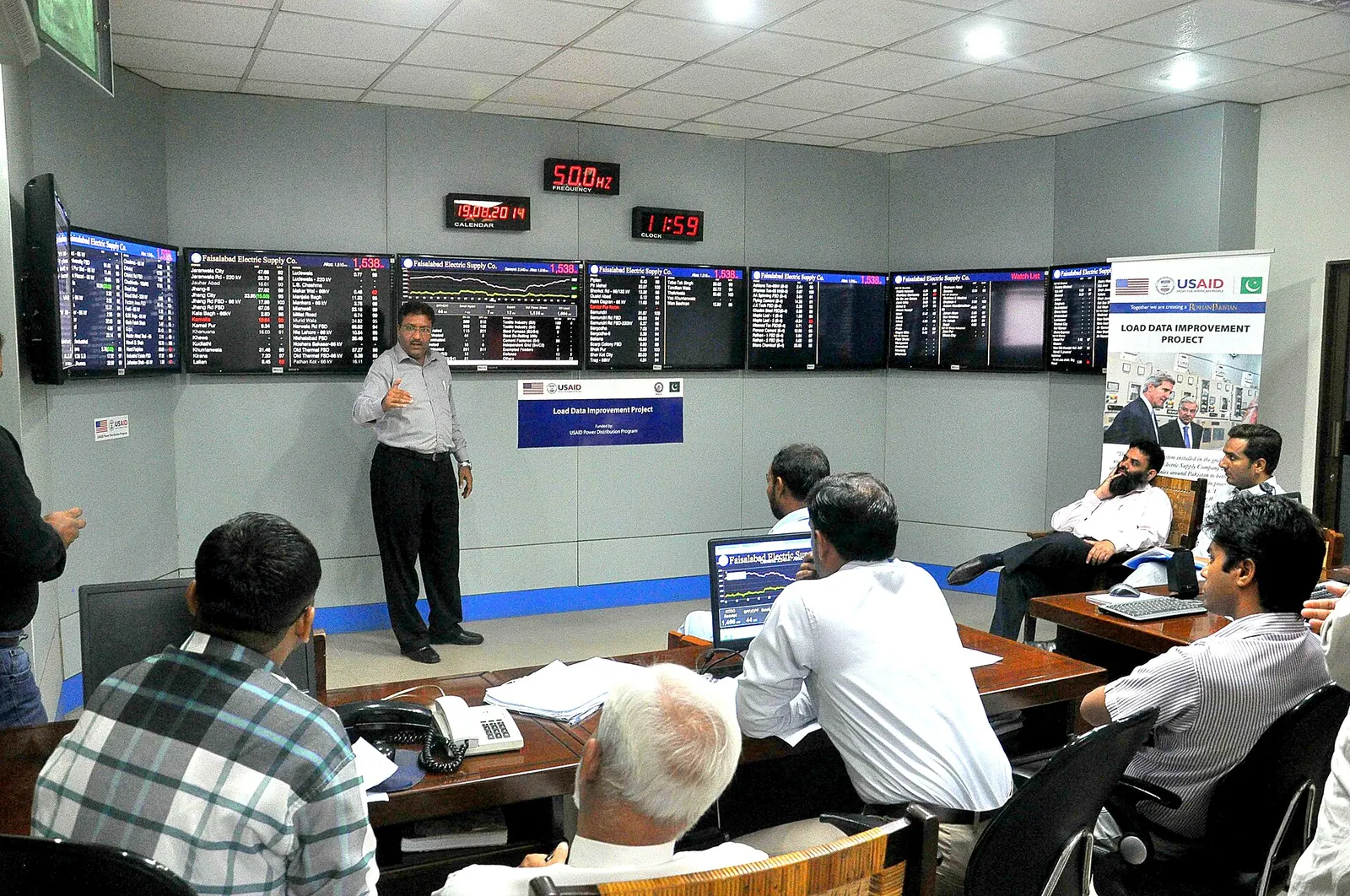
On 28 July 2026 the Privatisation Commission Board recommended that the Cabinet Committee on Privatisation approve restructuring plans and schemes of arrangement for FESCO, GEPCO and IESCO, the first batch of distribution companies up for sale. The plans are built on the three companies' audited accounts for the period ended 31 March 2026. Their centrepiece is a government-owned special purpose vehicle that will take selected assets and liabilities off the DISCOs' books before bidders see them. Business Recorder reported that the SPV would carry authorised share capital of Rs250 billion.
The commission has not said which liabilities move. That is the question that decides whether this is a sale or a subsidy. A buyer pricing FESCO will pay more for a company stripped of legacy payables, and the state will keep servicing what sits in the SPV through the budget or, more likely, through a surcharge on every consumer's bill. Both outcomes can be defensible. Neither can be judged until the schemes of arrangement are published with the line items.
The timetable
The original invitation for expressions of interest, issued in May, set deadlines of 7 July for FESCO, 6 August for GEPCO and 7 September for IESCO. The July board meeting moved FESCO to 7 August and GEPCO to 21 August, keeping IESCO at 7 September. By our count the FESCO window slipped 31 days and GEPCO 15 days, while IESCO held. Short delays of this kind are normal when the restructuring itself is still being approved, and bidders are better served by waiting for a settled balance sheet than by bidding on a moving one.
The commission is offering 51 to 100 per cent of each company with management control, and charges a processing fee of USD 5,000 per expression of interest per DISCO. The low fee invites a long list. A long list is fine, provided pre-qualification screens for people who have actually run high-loss distribution networks.
Our view
We think the SPV is the right tool and the wrong place to be vague. FESCO, GEPCO and IESCO are among the better-performing DISCOs, which is why they go first, and their sale should not be loaded with obligations that make the first transactions look worse than they are. But a carve-out that quietly parks receivables, pension liabilities and circular-debt payables in a state shell, with no published servicing plan, simply moves the problem to the Finance Division. The test for the Cabinet Committee is a public schedule of what moves to the SPV and how each item will be paid down.
The remaining DISCOs in the south and west carry far higher losses and will not attract this kind of interest. A first-batch sale that succeeds while those companies drift would leave Pakistan with two distribution systems running at very different standards.