
ISMO submitted its revised Indicative Generation Capacity Expansion Plan for 2025-35 to NEPRA in August 2025, as part of the Integrated System Plan. The revision updates the 2024-34 plan filed in April 2024. Its foreword lists what changed after months of consultation: a new load forecast, a much larger allowance for net metering, revised criteria for committed projects, an 800 MW quantum for market-based procurement, and a "least cost violation" treatment for Diamer Bhasha and the ACWA solar projects, meaning they are included for policy reasons even though the optimiser would not pick them.
The load factor problem
The most useful number in the document is not a capacity figure. ISMO reports that the national grid's load factor fell from 69 per cent in 2015 to 57 per cent in 2024. Peak demand keeps rising while average demand does not, so the system needs more capacity that sits idle most of the year, and capacity payments are spread over fewer units. The plan introduces a demand-side management scenario that assumes load factor recovers to 70 per cent by 2035. We think that assumption is optimistic without tariff changes that reward off-peak consumption, and the plan does not specify any.
Net metering is now modelled seriously. The plan assumes 8,120 MW of net-metered solar on the NGC system by 2035, with 2,400 MW added in FY2025 alone, plus 900 MW in Karachi. For scale, 8,120 MW is about 30 per cent of the 26,913 MW peak demand the plan records for 2024 (8,120 divided by 26,913). The plan's own load duration analysis concludes that net metering does little to reduce system peak, while cutting energy sales and base load. That combination, lower sales with an unchanged peak, is the arithmetic behind the falling load factor.
The price of politics
The plan compares scenarios on the present value of generation investment and operation to 2035. The unconstrained least-cost case comes to USD 39.14 billion. The rationalised reference case, which adds policy constraints, comes to USD 47.13 billion. Forcing in committed and strategic projects gives USD 54.80 billion. On our subtraction, forced additions cost USD 7.67 billion more than the reference case and USD 15.66 billion more than the unconstrained case.
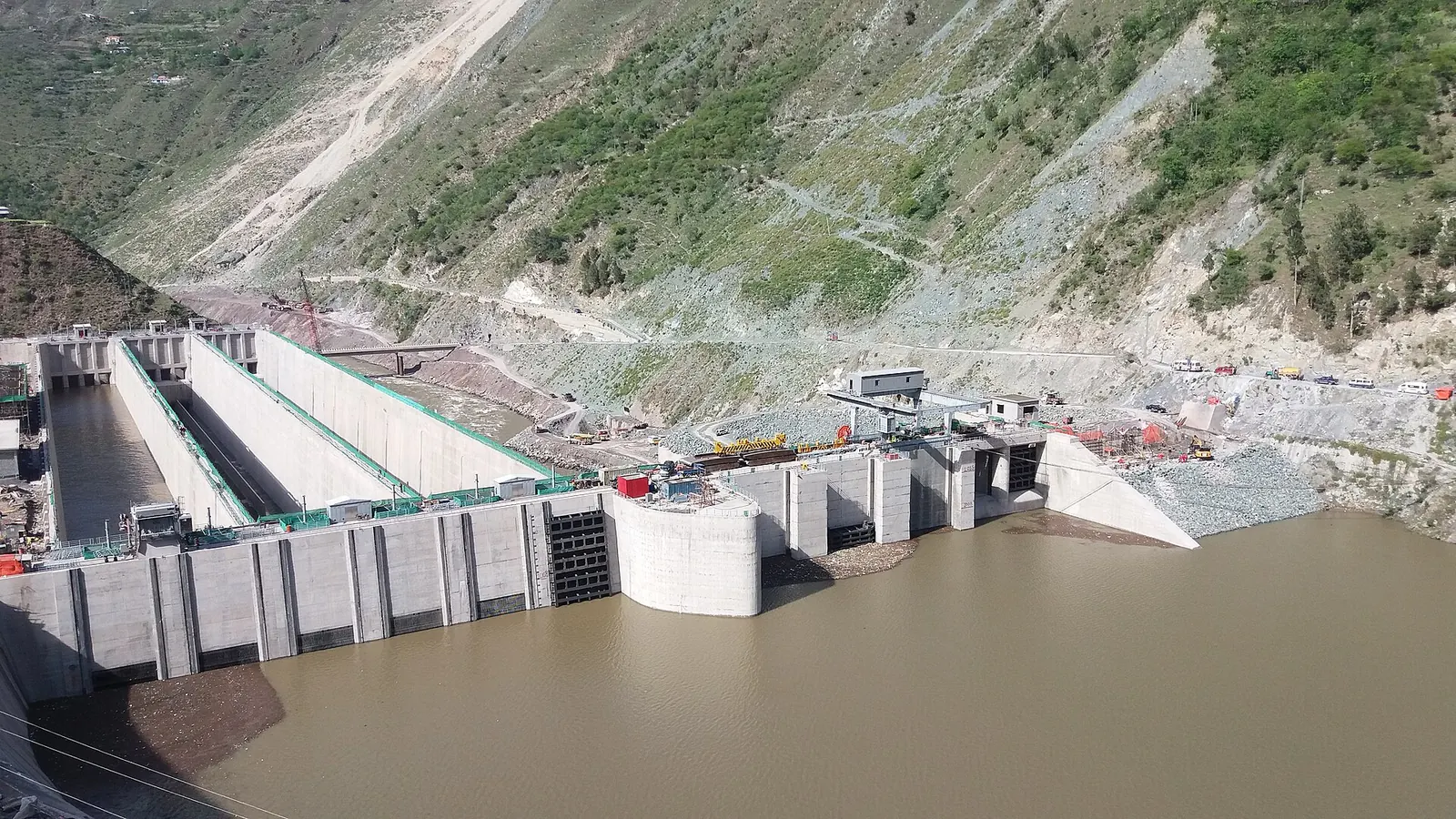
Hydro timing is the main reason committed projects are contentious. NGC's transmission addendum filed with the plan records delays to Dasu (2,160 MW), Mohmand (800 MW) and Diamer Basha (4,500 MW), together 7,460 MW of large hydro moving to later years.
Our view
Indicative plans in Pakistan have repeatedly been overridden by procurement decisions taken elsewhere. This revision is more candid than earlier ones about the cost of that, and NEPRA should use the scenario table directly: any project approved outside the least-cost case should come with a published estimate of its rupee premium per unit to consumers.
We would treat the 8,120 MW net-metering figure with caution in both directions. The plan derives it partly from one year of solar panel import volumes, which is a thin basis for a ten-year projection.