
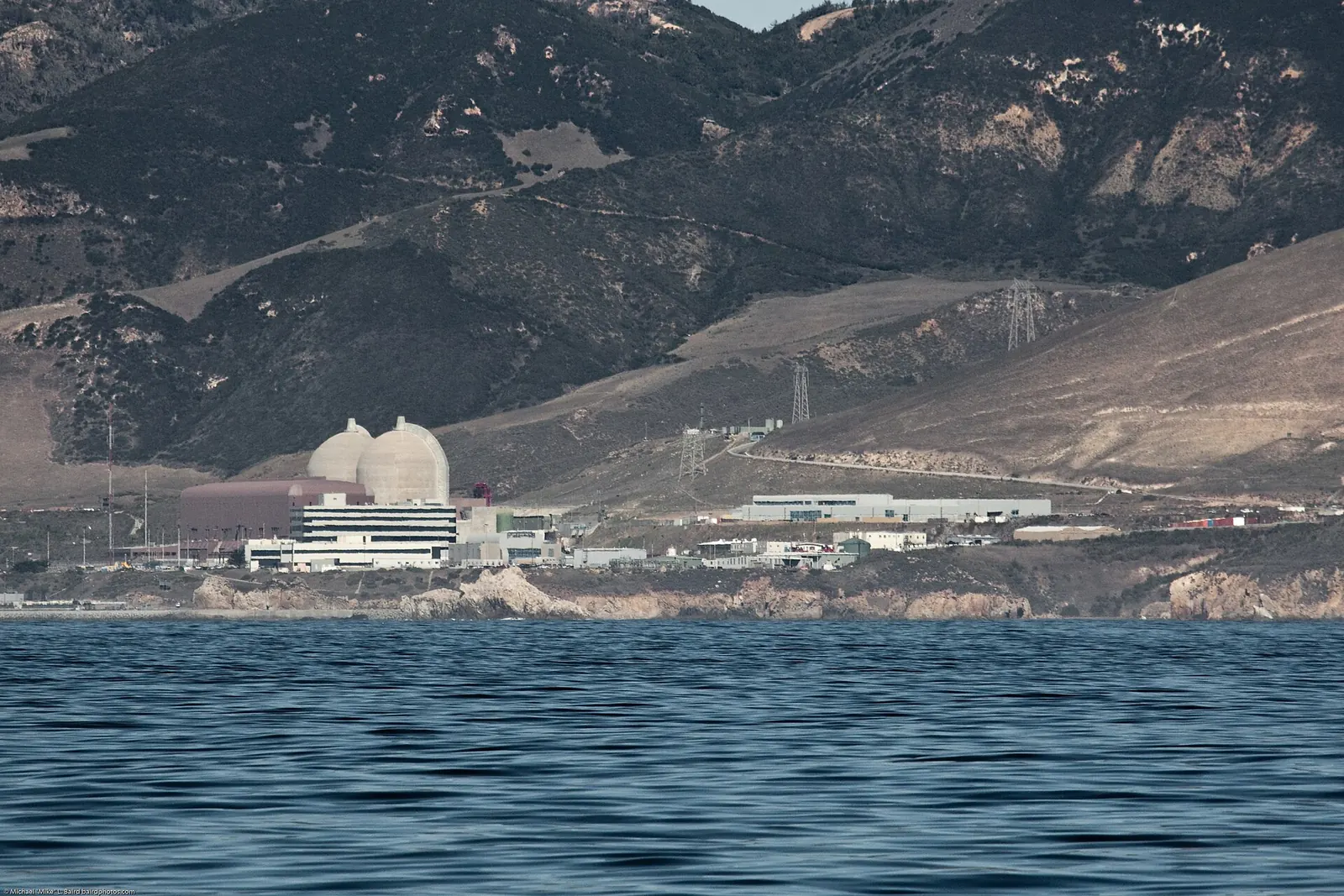
The ADVANCE Act, signed in July after passing the Senate 88 to 2 and the House 393 to 13, was written mostly with new reactors in mind. The bigger near-term question for U.S. firm supply is how long the existing fleet keeps running, and that runs through a less publicized NRC process: subsequent license renewal, which extends a reactor's operating license from 60 to 80 years.
By mid-November 2024 the NRC had completed four subsequent renewals, covering eight units at four stations: Turkey Point 3 and 4, Peach Bottom 2 and 3, Surry 1 and 2, and North Anna 1 and 2. Three more stations, Point Beach, Oconee and St. Lucie, had applications under review that were filed in 2020 and 2021.
The review got slower, then the agency fixed it
The timeline tells the story. Turkey Point's application was received in January 2018 and its renewed license issued in December 2019, 672 days later on our count. Peach Bottom took 604 days. North Anna, filed in August 2020, received its renewal in August 2024, after 1,465 days, more than twice as long as Turkey Point. Point Beach's application had been pending for 1,463 days by 18 November.
The delay was not about reactor safety. In February 2022 the Commission ruled, in three orders, that the 2013 generic environmental impact statement the staff had relied on did not cover subsequent renewal, which sent the environmental reviews for six stations back for further work. The staff issued a revised generic environmental statement in August 2024 that fully accounts for one term of subsequent renewal. North Anna's license followed the same month.
Why the fleet matters more than the pipeline
A reactor that runs to 80 years delivers firm, low-carbon output on a schedule of refueling outages. It also holds existing transmission connections and a trained workforce, which are scarce assets for a grid facing data center load growth. Coal is still leaving: EIA's February 2024 survey of planned retirements showed 2.3 GW of coal capacity scheduled to close in 2024, after 22.3 GW of coal retirements over the previous two years. Every nuclear unit that retires on top of that has to be replaced, mostly by gas in the near term, and new nuclear designs will not be at scale before the 2030s.
The commercial signal is changing too. Constellation filed a notice of intent on 23 October 2024 to seek subsequent renewal for Three Mile Island Unit 1, which the NRC now lists as the Crane Clean Energy Center. Owners are planning 80-year operation even for a unit that had stopped generating. Monticello's application, filed in January 2023, was also under review.
Our view
We think the ADVANCE Act's most valuable provisions for the next decade are the ones aimed at NRC efficiency and staffing, because the existing fleet's renewals depend on them. The 2022 environmental episode cost about two years on the affected applications, and it was a procedural gap, not a technical one. The agency should publish target review times for subsequent renewals and report against them. Applicants filing in 2025 and 2026 should be able to plan on something close to the Turkey Point timetable, not the North Anna one, now that the generic environmental analysis is in place.
Co-location of data centers at existing nuclear sites raises cost-allocation questions that FERC and PJM have not resolved. Those disputes should not be allowed to obscure the simpler point that keeping existing reactors licensed is the cheapest firm low-carbon capacity on offer.